Executive Statements
Sam Altman Warns AI Is Breaking the Labor-Capital Balance
Speaking at the BlackRock Infrastructure Summit, OpenAI CEO Sam Altman acknowledged that AI is upending the traditional relationship between labor and capital, warned of a painful adjustment period, and admitted nobody knows what to do about it.
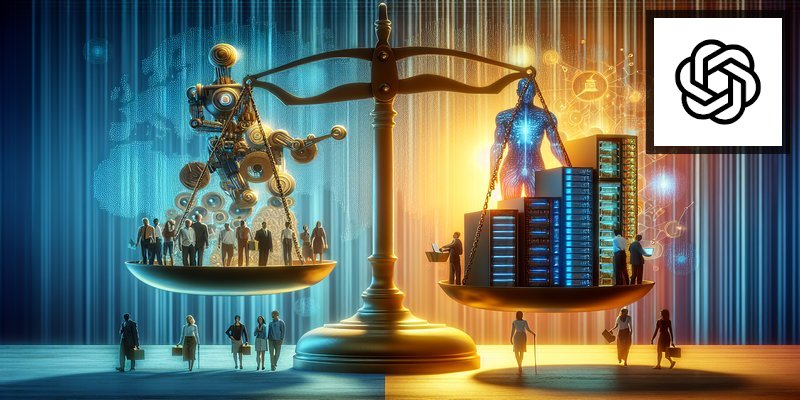
Altman Acknowledges AI Is Rewriting the Rules of Capitalism
OpenAI CEO Sam Altman delivered one of his most candid assessments of AI's economic impact on March 11 at the BlackRock Infrastructure Summit in Washington, D.C., admitting that artificial intelligence is fundamentally disrupting the balance between labor and capital that has underpinned modern capitalism.
Altman acknowledged that while some companies engage in "AI washing" — blaming AI for layoffs that would have happened anyway — the underlying threats to traditional employment are "grounded in reality." He described a new generation of startups deliberately avoiding large headcounts, preferring to invest capital heavily into computing power instead.
"If it's hard in many of our current jobs to outwork a GPU, then that changes. So that's, like, a real change to how capitalism has worked." — Sam Altman
The Rise of Zero-Person Startups
Altman pointed to entrepreneurs in India attempting to build "zero person" startups — companies that rely entirely on AI to write software, handle legal work, and manage customer support. He described the AI landscape as having crossed a threshold into "major economic utility" over recent months, rapidly evolving from simple coding assistance to executing complex tasks across knowledge work.
The OpenAI CEO also predicted that AI's cognitive capacity housed in data centers will exceed human cognitive capacity outside them by late 2028 — a timeline that would accelerate the displacement of knowledge workers across industries.
A Painful Adjustment Ahead
When pressed on solutions, Altman was notably direct about the uncertainty: "If there was an easy consensus answer, we'd have done it by now, so I don't think anyone knows what to do." He warned that "the next few years are going to be a painful adjustment," marked by "very intense and uncomfortable debates" over reshaping society.
Altman predicted that traditional economic metrics like GDP might decline in a "forever deflationary world," forcing society to rethink how it measures quality of life. He suggested that leaders at all organizational levels will soon become unable to perform their duties without heavy AI assistance.
What This Means for Workers and Job Seekers
Altman's remarks at BlackRock — one of the world's most powerful investment firms — carry particular weight because they validate anxieties that many workers have expressed about AI displacement. For job seekers, the message is clear: adaptability and AI fluency are becoming essential. Roles that combine human judgment with AI-augmented capabilities will likely prove most resilient, while purely routine knowledge work faces growing pressure. The acknowledgment from OpenAI's own CEO that "nobody knows what to do" underscores the unprecedented nature of this economic transition.